768 MB of VRAM was once lavish; today's appetite isn't all need
A 2011 GPU roundup shows how fast memory budgets grew. We think part of that growth is real progress, and part is a habit of never having to economize.
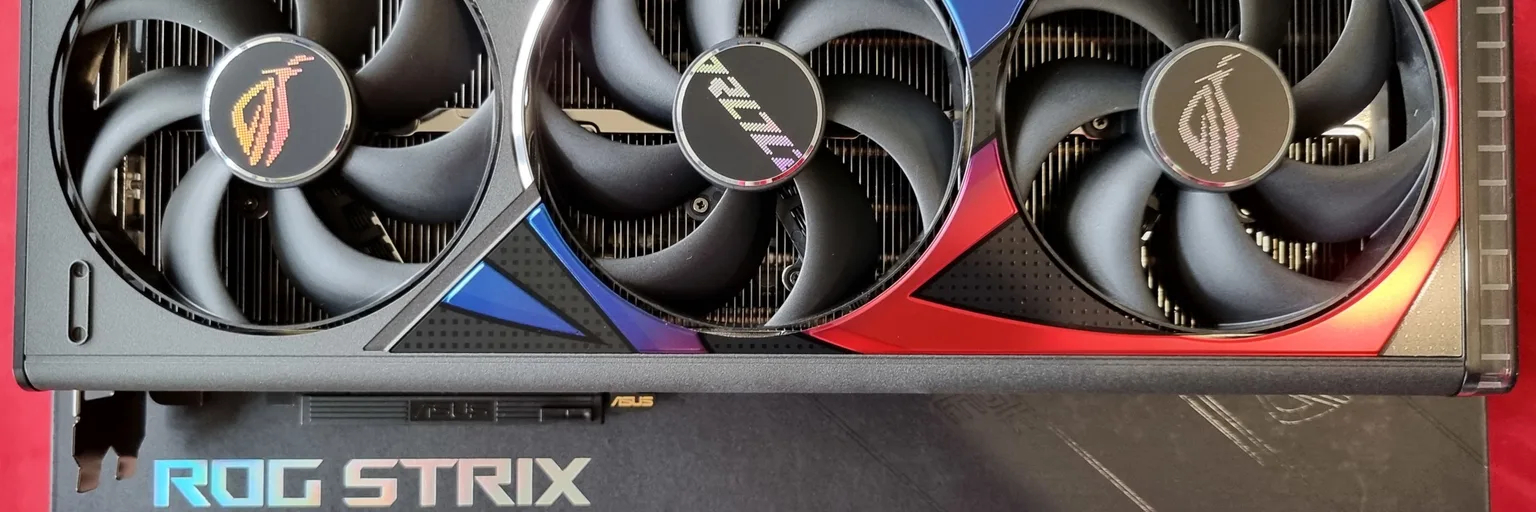
Photo: PantheraLeo1359531 / Wikimedia Commons (CC BY 4.0)
Was 768 MB of video memory ever really "lavish," or have we just forgotten what it feels like to budget? A look back from German outlet ComputerBase makes the question hard to dodge, and we think the honest answer is uncomfortable for both sides of the argument.
What the 2011 test actually showed
ComputerBase's retrospective revisits an October 2011 comparison of 14 Radeon and GeForce cards from six model years, run on an overclocked Core i7-2600K across 14 games. The top card, the GeForce GTX 580, carried 1.5 GB. The GeForce 8800 GTX, which introduced unified shaders and a generous-for-the-time 768 MB on a 384-bit interface back in 2006, was still keeping up five years later. In Dirt 3 it managed 57.3 FPS.
The test resolution was 1,680 × 1,050, which ComputerBase notes is barely a fifth of today's high-end 4K. For comparison, it lists the GeForce RTX 5090 at 32 GB of GDDR7.
The budget grew, but not only because games got better
Some of that growth is honest. Roughly five times the pixels needs more memory, and ray tracing and richer assets cost real bytes. We aren't going to pretend a 768 MB card should run today's games.
But look at the arithmetic. A top card went from 1.5 GB to 32 GB. A fifth of 4K can't explain that on its own. ComputerBase's own current buying guide says 8 GB cards are no longer enough for modern games, and that even at 1080p many recommended cards are fast ones simply because only they offer more than 8 GB. Read that again: the recommendation is driven by memory, not by pixels. In our view, that is what happens when a whole industry stops treating memory as scarce.
A 2010 ComputerBase memory analysis of the GTX 460 shows the old mindset. Its editors found 1,024 MB sufficient for most games and said a 768 MB card made sense only up to 1680x1050 without constant anti-aliasing. People measured, argued over megabytes, and bought for the hardware that existed. We'd argue that kind of discipline is good for the way software gets written.
Constrained coders are a skill, not nostalgia
This is where the demoscene and creative coding come in. Anyone who has squeezed an effect into a tiny budget knows that memory is a design decision, not a tax. Texture streaming, compression, reuse and procedural generation are not retro tricks. They are exactly what a game does when it refuses to assume a 16 GB card.
We should be fair here. ComputerBase's retrospective doesn't tell us which specific modern games are wasteful, and we won't name any. Measuring what an engine actually needs versus what it merely reserves takes profiling, and we haven't seen that data here. So treat this as an argument, not a finding.
There is also a counterpoint worth taking seriously. ComputerBase points out that comparing frame rates across generations is now murky, because upscalers like DLSS and FSR reconstruct images from lower render resolutions and frame generation adds interpolated frames. In 2011 two test runs sufficed. Today the yardstick itself has moved, which makes "bloat" harder to prove and easier to wave away.
Verdict: demand frugality, but don't blame the buyer
If you are buying a card, the market has made the call for you. Based on the current guidance, 8 GB is a risky bet for new AAA titles, and we wouldn't fight that. ComputerBase's Radeon coverage also reports that AMD's 4 GB Radeon RX 9050 trails the 8 GB version by 27 percent on average in games, so skimping doesn't look like it pays.
But the lesson of the 8800 GTX is that architecture and smart use of memory can outlast raw capacity. A card with a clever design stayed competitive for five years. We would love to see more studios treat a memory budget as a creative constraint and publish what they cut. Until then, the people who still write for tiny budgets are not relics. They are the ones best placed to tell us how much of that 32 GB is actually needed.
No topics yet: start the first one.
More stories
DLSS 5 on Portal RTX is a remix, not a restoration, and that's fine
Neural rendering reinterprets Valve classics rather than restoring them, and it works only because it ships switched off, one toggle from the original look.

DLSS 5 in Metro Redux is a gift, but only if you can say no
A quiet DLSS 5 neural rendering update for Metro 2033 and Last Light Redux shows AI can revive old games. Preserving the original art still means a real off switch.
FSR 4.1 Could Make Xbox Upgrades Feel Bigger Than New Hardware
AMD’s reconstruction technology is coming to Xbox Series X|S, but its success will depend on cleaner motion and developer adoption—not headline claims about free performance.

Trainspotting’s 4K return proves pixels are only half the story
Thirty years on, Trainspotting matters less as a nostalgia trip than as a surviving design system: abrasive, modular and still ready to be remixed.