FSR 4.1 Could Make Xbox Upgrades Feel Bigger Than New Hardware
AMD’s reconstruction technology is coming to Xbox Series X|S, but its success will depend on cleaner motion and developer adoption—not headline claims about free performance.
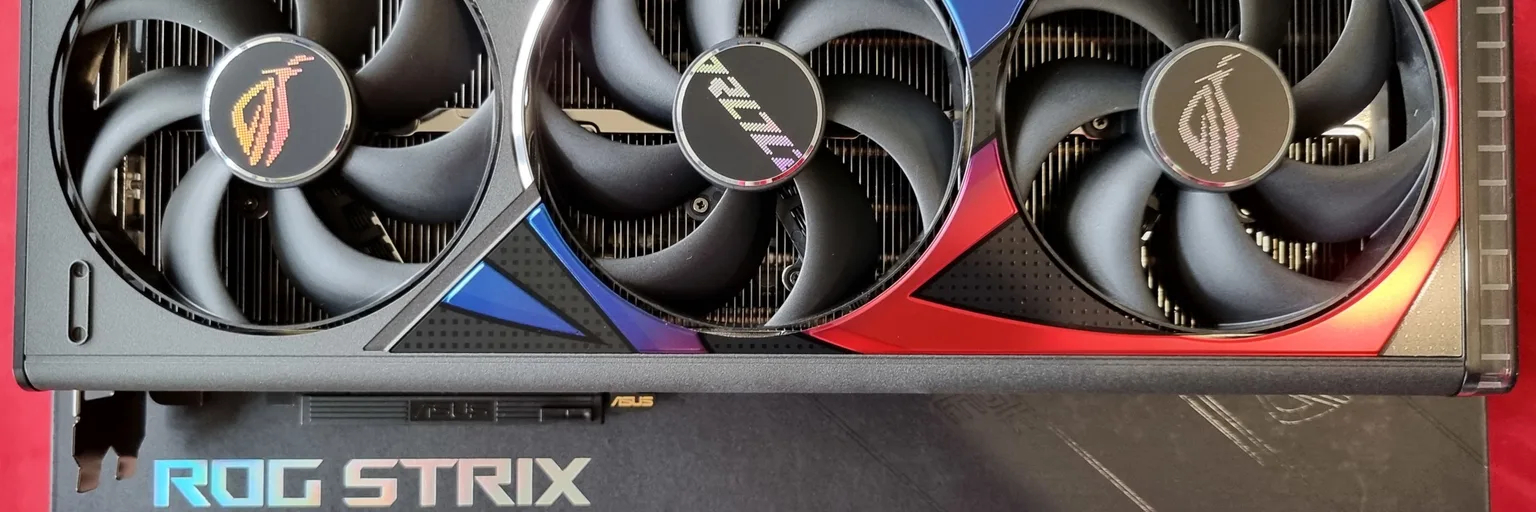
AI-generated image
A new console generation used to be the obvious answer to better graphics. Now the more interesting upgrade may arrive as software: AMD’s FSR 4.1 is coming to Xbox Series X|S, promising improved reconstruction and image quality on hardware already in homes. That is potentially more important than it sounds—but only if the pixels hold together when the camera moves.
AMD and Microsoft have confirmed support for FSR Upscaling 4.1 on Xbox Series X and Series S, as TechPowerUp reports. AMD describes the update as machine-learning-based upscaling intended to reconstruct crisp, high-quality visuals, while reporting also places the technology on other devices and older Radeon graphics hardware. Microsoft has said it is coming “very soon” to Xbox game developers, according to Digital Foundry.
That last detail matters more than the announcement itself. A rendering technique is not a magic system update if developers do not integrate it well, tune it for each game, and give players a result that looks stable rather than merely sharper in a still image.
The next Xbox upgrade may be a reconstruction upgrade
FSR is an upscaling and reconstruction technology: a game renders at a lower internal resolution, then software rebuilds an image intended to resemble a higher-resolution one. The appeal is obvious. Developers can spend less rendering power on every native pixel and redirect that budget toward resolution, effects, frame rate, or more demanding scenes.
That makes FSR 4.1 a distinctly modern kind of hardware upgrade. The console does not gain a faster processor or more memory, but the same resources could produce a more convincing image if the reconstruction is better. In our view, this is where platform makers should be looking. Extending the useful life of existing machines through rendering software is less glamorous than launching a new box, but it can be more meaningful for the people who already own one.
The promise is especially relevant to Xbox Series S, where every performance decision is more visible. Yet the announcement should not be reduced to “free frames.” AMD’s own announcement emphasizes both improved frame rates and image quality in the broader FSR 4.1 push, while the Xbox reports focus on improved upscaling. Those are related goals, not identical outcomes. A higher frame count does not automatically mean a cleaner picture or better responsiveness.
Motion is the courtroom, not the screenshot
The central test for FSR 4.1 will be movement. Community discussion around the announcement points to familiar reconstruction complaints: a smeared or “vaseline” look, breakup during motion, weak fine-detail resolution, and unstable edges. Those comments are not controlled reviews, so they should be treated as expectations and concerns rather than verdicts. But they identify exactly where the technology has to earn its place.
A still frame can make almost any reconstruction method look persuasive. Games are experienced as moving sequences, with foliage, particles, thin geometry, fast camera pans, reflections, and characters crossing complex backgrounds. If an image sharpens only when the scene is calm, the upgrade is cosmetic. If it introduces shimmer or trails while the player turns, it has simply exchanged one compromise for another.
This is why the arrival of FSR 4.1 should be judged per game, not by the feature’s name. Temporal reconstruction depends on history data, motion information, rendering resolution, anti-aliasing choices, and the way a particular engine handles detail. A strong implementation can make a game feel transformed; a careless one can make “better image quality” sound like marketing language.
Developers, not Microsoft, decide whether the promise lands
The announcement gives Xbox developers another tool, not a guaranteed visual preset. Digital Foundry’s report says the technology is coming to game developers very soon, which implies that support still has to become a practical part of production. That creates both an opportunity and a risk.
The opportunity is obvious: studios can revisit performance targets without waiting for a new console. They might use reconstruction to preserve a higher-quality mode, stabilize demanding scenes, or make a lower-power machine more capable. The risk is that FSR becomes another checkbox in a crowded graphics menu, with limited testing across resolutions and motion conditions.
Players should therefore be skeptical of sweeping claims about “huge performance gains.” GameSpot describes the expansion as a graphics boost for Xbox, handhelds, and older Radeon cards, but a platform-wide announcement cannot establish how much any individual game will improve. The responsible measure will be image stability, frame pacing, and whether the chosen mode remains attractive during actual play.
Software-defined progress is exciting—and easy to oversell
There is a broader lesson here. Console generations are usually sold as clean breaks: new silicon, new visual targets, new reasons to buy. FSR 4.1 suggests a messier but potentially healthier model, in which rendering advances arrive incrementally and travel across hardware families. AMD’s announcement also reaches beyond current Xbox consoles, reinforcing the idea that reconstruction is becoming a layer of the graphics stack rather than a feature reserved for one new machine.
That portability is its strength. It gives developers a common direction and gives older hardware another chance. It is also its weakness: the more a game depends on reconstruction, the more its final image depends on implementation details that marketing cannot summarize.
Our verdict is cautiously positive. FSR 4.1 arriving on Xbox Series X|S matters more than another promise of distant hardware because it could improve the machines people have now. But players should not celebrate a sharper acronym. They should wait for moving footage, game-specific comparisons, and developer settings that explain the trade-offs. If FSR 4.1 reduces blur and breakup without turning motion into a visual negotiation, software may indeed deliver the most convincing console upgrade of the next cycle. If not, it will be another reminder that reconstructed pixels are only as good as the compromises behind them.
No topics yet: start the first one.
More stories
DLSS 5 in Metro Redux is a gift, but only if you can say no
A quiet DLSS 5 neural rendering update for Metro 2033 and Last Light Redux shows AI can revive old games. Preserving the original art still means a real off switch.
Trainspotting’s 4K return proves pixels are only half the story
Thirty years on, Trainspotting matters less as a nostalgia trip than as a surviving design system: abrasive, modular and still ready to be remixed.

The PS6's Soaring Production Cost: A Return to the Console Pricing Ice Age?
Leaked figures for PlayStation 6's memory and storage costs, now over $680 alone, are a major driver behind a total manufacturing cost that could push its retail price well over $1,000, potentially limiting market reach and creative accessibility for developers.

Edgerunners 2: Is Brutal Anime the New Canvas for Digital Art?
Netflix's 'Cyberpunk: Edgerunners 2' leverages its hyper-violent aesthetic to push the boundaries of animation, transforming gore into a surprisingly thoughtful visual experience.