Size Coding's Enduring Fascination: The Art of Extreme Compression
In an era of boundless storage, the demoscene's size-coding artists continue to push boundaries, crafting complex visual and auditory experiences within minuscule byte limits, proving ingenuity trumps gigabytes.
AI-generated image
In a world where software updates routinely measure in gigabytes and operating systems command terabytes of storage, the very idea of creating a complex multimedia experience in mere bytes might seem like a relic from a bygone era. Yet, within the vibrant demoscene, the art of "size coding" isn't just surviving; it's thriving, captivating programmers and artists with its extreme limitations and the boundless creativity they inspire. We are not just talking about efficient code; we are talking about creating breathtaking graphics and immersive soundscapes that fit into spaces smaller than a single tweet.
Size coding refers to the practice of crafting programs, known as "intros" within the demoscene, that are restricted to incredibly tiny file sizes—typically powers of two like 256 bytes, 1K, 4K, or 64K. These productions are a testament to programming skill, pushing hardware and software to their absolute limits to generate real-time audiovisual effects from almost nothing. Recent examples, such as "Encounter," a 256-byte WebAssembly intro showcased at the Outline 2024 demoscene party, or HellMood’s "Memories," a 256-byte MS-DOS program that won the Revision 2020 competition, vividly illustrate what's possible within these constraints.
The Scarcity Principle: Why Less is More

The fundamental allure of size coding lies in its extreme scarcity. Imagine creating a cinematic experience, complete with wave simulations, sky and water shaders, and transparency, all while adhering to a 256-byte limit, as seen in "Encounter." This isn't just about saving space; it's about reimagining how code functions. Every single byte is precious, forcing developers to exploit every architectural quirk and mathematical shortcut available. As SizeCoding.org notes, practicality and common sense are sometimes thrown out the window just to shave a single byte.
Achieving such feats often involves highly specialized tools and techniques. For instance, creating a WebAssembly intro like "Encounter" utilizes languages such as CurlyWAS, which compiles Rust-like syntax into WASM code. This approach leverages specific features like inline expressions for constant evaluation and lazy keyword implementations using local.tee instructions to combine setting and getting local variables, all to minimize byte count. Even integer encoding, like 32-bit integers in LEB128 format, and specific syntax sugar, such as adding _f to a constant for float conversion, are employed to save space. The intellectual challenge of these constraints is a core driver for many size coders.
However, the landscape of size coding is diverse, with different platforms offering unique advantages and challenges. While WebAssembly benefits from compression of its virtual cartridge, which helps negate overhead from platform interconnection, traditional x86 DOS environments can still be king for size-constrained programming. This is because x86 allows for the creation of tiny code decompressors, a trick not easily replicated in WebAssembly due to its executable code space separation. Such intricate details underscore the depth of knowledge and cunning required in this art form.
Ultimately, size coding is more than a technical exercise; it's a vibrant subculture of the demoscene, with roots in Europe, where programmers push the boundaries of what's creatively and technically possible. The competitive environment of parties like Revision and Outline fosters innovation, driving artists to create jaw-dropping visuals and audio within limits that defy modern software development norms. It serves as a powerful reminder that true innovation often thrives when resources are scarce, demonstrating that boundless creativity can emerge from the smallest of digital canvases.
Keep reading
No topics yet: start the first one.
More stories
Cyberpunk 2077 Film: Can It Code the Demoscene Spirit into the Big Screen?
CD Projekt Red's choice for an original *Cyberpunk 2077* film narrative presents a golden opportunity to embed the game's radical digital art ethos, but only if it dares to embrace the demoscene's rebellious spirit beyond mere aesthetics.
Twitch's Unexpected Canvas: Why Demoscene and Creative Coding Thrive Live
Beyond its gaming roots, Twitch has cultivated a vibrant, interactive home for live coding, fostering real-time collaboration and community growth among demoscene artists and creative programmers.
Why the ZX Spectrum Demoscene Still Compels Creative Coders
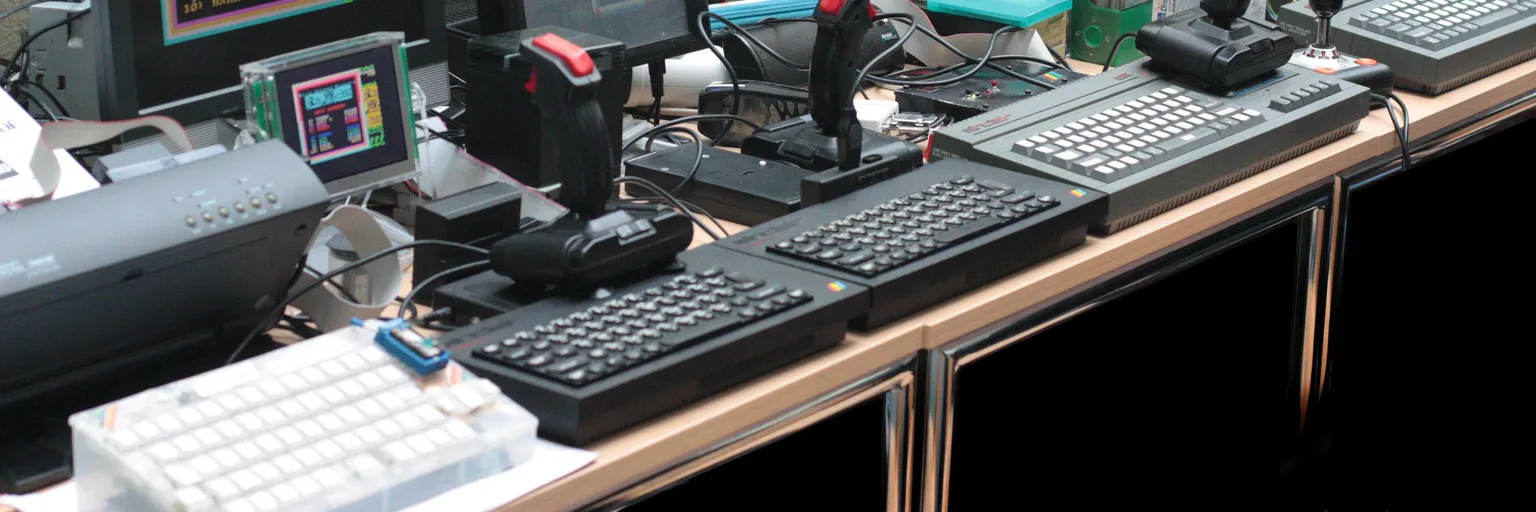
Mark Dastmalchi-Round's recent ZX Spectrum demoscene intro illustrates how stringent retro hardware limitations ignite ingenuity and push creative boundaries in the modern era.
The Demoscene: Digital Art's Unsung Vanguard Earns Global Stage
From its humble origins in 1980s software cracktros to gaining UNESCO cultural heritage status, the demoscene stands as a testament to digital creativity and technical artistry.