Graphing Calculators: The Unlikely Canvas of a Digital Art Form
Beneath the unassuming facade of classroom tools, Texas Instruments calculators fostered a vibrant demoscene, transforming cold logic into a playground for digital artists.
AI-generated image
Can a device designed for algebraic equations and calculus become a canvas for breathtaking digital art? For over a decade, the humble graphing calculator, particularly models from Texas Instruments like the TI-83 and TI-89, has nurtured a vibrant, underground subculture of programmers and artists. It's a testament to human ingenuity and the demoscene's enduring spirit that these classroom mainstays have been twisted, poked, and prodded into producing impressive real-time audiovisual spectacles.
What began as students tinkering with basic programming languages eventually evolved into sophisticated efforts, harnessing the calculators' raw power through assembly code and specialized toolchains. From simple games to complex visual demos, this unique niche mirrors the broader demoscene's drive to push hardware limits, creating art from constraint. It’s a compelling story of how utility can become art, echoing the very origins of the demoscene itself.
More Than Math: The Demanding Art of Constraint Programming
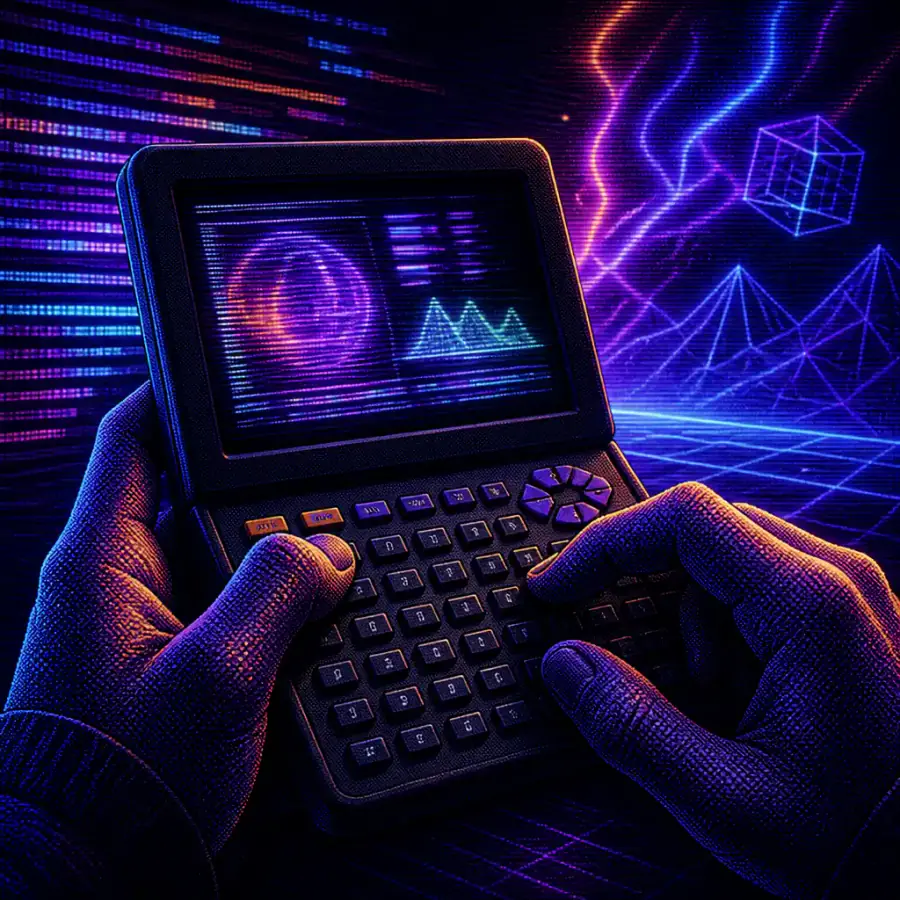
The demoscene, at its core, is about showcasing technical and artistic prowess by creating self-contained audiovisual programs, often under extreme size and hardware limitations (Source 2). This ethos finds a perfect parallel in graphing calculator programming. Imagine crafting an animated sequence with synchronized music that runs on a monochrome screen with limited memory and processing power. This is the challenge that drew many to platforms like the TI-83 and the powerful TI-89 Titanium, often described as a "beast of a calculator" and "very powerful" by enthusiasts (,). These devices, while designed for mathematical computation, became arenas for digital artists to craft intricate programs, sometimes pushing their limits to create 3D graphics and complex animations. The goal, much like the broader demoscene with its 64k or 4k intro competitions, is to demonstrate programming, visual art, and musical skills under strict hardware constraints (Source 2).
This spirit of pushing boundaries is exemplified by recent productions such as demosCEne, a demo specifically for the TI-84 Plus CE, which debuted at the Revision 2025 demoscene event (Source 1). Such creations are often developed using specialized tools like the CE C Toolchain, enabling coders to unlock capabilities far beyond standard BASIC programming. The demoscene thrives on such challenges, turning limitations into catalysts for ingenuity, and its significance is now globally recognized, with several European countries, including Finland, Germany, and Poland, adding their demoscene to their national UNESCO lists of intangible cultural heritage (,). This acknowledgment underscores the cultural value of an art form born from technical mastery and creative problem-solving, even on the most unexpected platforms.
Keep reading
No topics yet: start the first one.
More stories
Why the iMac G3 LEGO project is more than just nostalgia
The community-backed initiative to immortalize the iconic Apple iMac G3 in LEGO bricks is not merely a trip down memory lane, but a powerful affirmation of design's lasting influence and a catalyst for digital art's future.
Flash Games: The Unsung Blueprint for Accessible Creative Coding
The remarkable resurgence of archived Flash games reveals a pivotal moment for creative coding and browser-based experiences, underscoring the enduring power of accessible tools and dedicated digital preservation.
PS5 Emulation on Xbox: A Boundary-Breaking Technical Statement
The surprising development of PlayStation 5 games booting on Xbox Series X via emulation is a testament to the open-source community's ingenuity, signaling a future where console boundaries blur and preservation efforts gain unprecedented visibility.
Community Ports: The Essential Architects of Retro Gaming's Future
Community-driven recompilations and native ports are not merely about reliving nostalgia; they represent the most dynamic and critical force ensuring classic games endure against technological obsolescence and proprietary barriers.