Demoparty Titans: How Assembly and Revision Define the Scene
One has strategically broadened its appeal to embrace gaming and esports, while the other remains a dedicated bastion for pure digital artistry. Both Assembly and Revision exemplify the dynamic evolution of the demoscene.
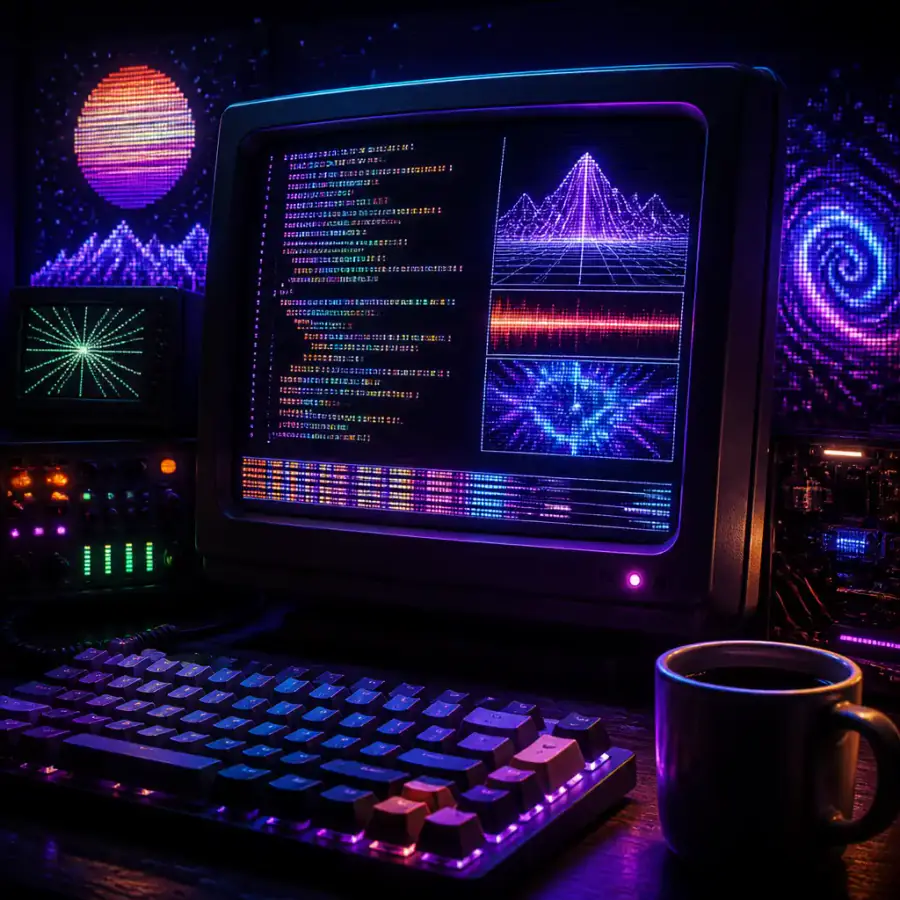
AI-generated image
What truly happens when hundreds, even thousands, of digital artists and coders converge, fueled by caffeine and a shared passion for pushing the boundaries of real-time computer graphics and sound? The demoscene, a global network of creative minds, finds its ultimate expression in the demoparty, an event where the spirit of competition meets collaborative innovation. These gatherings are far more than mere LAN parties; they are vibrant festivals showcasing programming, visual art, and musical prowess, with two giants—Finland's Assembly and Germany's Revision—leading the charge, each charting its own distinct course.
Demoscene productions, or 'demos,' are non-commercial computer-generated audio-visual experiences designed to demonstrate programming and artistic skill. A demoparty is the crucible where these creations are forged and presented. Attendees submit their work to various 'compos,' or competitions, which can range from cutting-edge demos and intros to pixel art, tracker music, and 'oldskool' categories for legacy platforms. Entries are judged, then displayed on a massive screen, with attendees voting for their favorites before results are published online. Beyond the competitive aspect, demoparties often include educational seminars on coding, graphic design, and music composition, fostering a unique blend of learning, sharing, and celebration.
Assembly's Expansive Vision: From Demos to Esports
Since its inception in Kauniainen from July 24-26, 1992, Assembly has evolved significantly. It is now known as the biggest computer event and gaming festival in Finland, and one of the world's largest demoparties, regularly held at Messukeskus in Helsinki. Initially organized by pioneering groups like Complex, Rebels, and Future Crew, Assembly quickly outgrew its early venues, drawing over 5,000 visitors and 3,500 computers to Helsinki Halli in 1999. The event has consistently pushed boundaries, even hosting the first Doom 3 competitions in August 2004, just days after the game's release, as reported by Wikipedia).
However, Assembly's journey has seen it embrace a broader vision beyond its pure demoscene roots. While the summer event, Assembly Summer, maintains traditional demoparty elements, the Assembly Winter party has become explicitly gaming-oriented. This shift reflects a broader strategy, particularly since Telia Company became a majority shareholder in Assembly Organizing Oy, aiming to expand into esports and gaming content production, as detailed on Assembly's own history page. While some long-time demosceners observed a heavier focus on gaming as early as 2014, with many young visitors primarily interested in multiplayer games, the core demo competitions still command immense respect and draw a dedicated crowd, showcasing the enduring power of the demoscene's artistic tradition. AssemblyTV further extends its reach, broadcasting not just competitions but also educational sessions and party reports worldwide, demonstrating a sophisticated media presence that bridges the gap between digital art and mainstream appeal.
Revision: The Pure Demoscene's Unwavering Beacon
In contrast to Assembly's diversification, Revision, held annually during Easter in Saarbrücken, Germany, proudly stands as the world's largest pure-demoscene event. This distinction is crucial, signifying a dedicated focus on the art form without the extensive gaming and esports integration seen elsewhere. Revision effectively succeeded earlier German demoparties like Mekka/Symposium and Breakpoint, establishing itself as a vital hub for creators. For instance, Revision 2026 is scheduled from April 3-6 at E Werk in Saarbrücken, a testament to its consistent presence.
Revision embodies the quintessential demoparty experience, emphasizing the raw skill and creativity that define the scene. Competitions often require showing work-in-progress images to prove originality, especially in graphics compos, highlighting a commitment to authentic creation. The party maintains a strong online presence, streaming live on Twitch, ensuring that its impact reaches beyond the physical venue. In a world where many cultural events broaden their scope to attract larger audiences, Revision's unwavering dedication to the demoscene's core tenets—programming, art, and music—makes it a unique and invaluable institution, ensuring the scene's focused evolution.
The Enduring Appeal of Hybrid Participation
Beyond the physical venues, the demoscene has also seen a significant rise in online participation, particularly highlighted by events like Assembly 2020 which moved entirely online. While not a replacement for the communal energy of an in-person party, online platforms and live streams have democratized access to demoscene events. Revision, with its dedicated Twitch channel, and Assembly's comprehensive AssemblyTV broadcasts, ensure that productions reach a global audience. This hybrid approach allows for the competitive spirit and artistic output to thrive, bridging geographical distances and making these intricate digital creations accessible to a broader public. Whether attending in person or watching from afar, the shared experience of witnessing innovative digital art continues to bind the demoscene together.
The demoscene thrives on ingenuity and collaboration, and its annual gatherings, particularly Assembly and Revision, are far more than nostalgic trips into computing history. They are vibrant, living testaments to the boundless creativity of digital artists. While Assembly bravely navigates the confluence of gaming, esports, and digital art, Revision remains a focused sanctuary for the demoscene's purest expressions. Both are essential, not just as venues for competition, but as crucial meeting points where the past, present, and future of real-time computer art are continuously redefined. In our view, the continued success of these diverse approaches demonstrates the scene's remarkable adaptability and enduring relevance in the digital age, proving that the drive to create and share beauty through code is as strong as ever.
Keep reading
No topics yet: start the first one.