Wired Headphones: A Counter-Culture Statement Against Digital Overload
The unexpected comeback of wired headphones, championed by celebrities and Gen Z, signals a deeper cultural shift towards digital minimalism and intentional tech use, rather than mere nostalgia.
Photo: Dinopkk / Wikimedia Commons (CC BY-SA 4.0)
In a world saturated with sleek, wireless earbuds, the sight of a familiar cable dangling from the ears of celebrities and everyday trendsetters alike might seem, at first glance, like an ironic throwback. Yet, the resurgence of wired headphones, accompanied by a broader fascination with physical media like CDs and MP3 players, is more than just a fleeting vintage trend. It represents a nuanced counter-cultural statement, a visible rebellion against the always-on, hyper-connected digital age, even if the rebellion itself is often curated for online consumption.
From Bella Hadid and Harry Styles to Dua Lipa, Charli XCX, Ariana Grande, Paul Mescal, Emily Ratajkowski, and Kaia Gerber, a growing roster of A-listers are plugging back in, as documented by outlets like Harper's Bazaar. This isn't primarily about superior sound quality or a sudden aversion to Bluetooth; it’s a deliberate aesthetic choice that taps into a yearning for simplicity and intentionality in an increasingly complex digital landscape, particularly among younger generations. As Good Housekeeping points out, this movement extends to dedicated music players and building physical music collections, emphasizing a desire for more intentional listening experiences away from smartphone distractions.
The Performative Allure of Offline Signaling
At the core of this trend lies a fascinating contradiction: the performative display of offlineness. While wired headphones appear to signal detachment from the digital world, their popularity often blossoms precisely because of their visibility in online aesthetics and trends. As The Vermont Cynic observes, celebrities don't wear wired headphones because they're cheaper, but because the aesthetic revival signifies being generally offline, without truly committing to that premise. This aligns with a broader Gen Z desire to revisit a time before constant digital engagement, reflected in Y2K fashion, 90s minimalism, and the resurgence of digital cameras.
This trend can be seen as a low-effort, low-cost way to signal to the world: "you’re offline enough to be cool, but online enough to be trendy." It’s about looking like you don't care, by wearing a very visible piece of technology meant to be perceived.
No topics yet: start the first one.
More stories
The pocket C64 slipping to April 2027 is the best news it could get
Blaze pushed THEC64 Handheld from October 2026 to April 2027 over build quality. For a 129.99-euro emulator, a late launch beats a bad one.
MustardOS Andromeda proves handhelds get their soul from the community
A community-built firmware just shipped roughly 1,250 changes for cheap retro handhelds. Manufacturers should stop treating that as a threat and start treating it as the product.
The A1200 at 190 euros: judge it by what it lets you do
A full-size Amiga 1200 remake for about 190 euros is welcome, but the badge isn't the point: openness, hackability and the game library decide if it's a real Amiga.
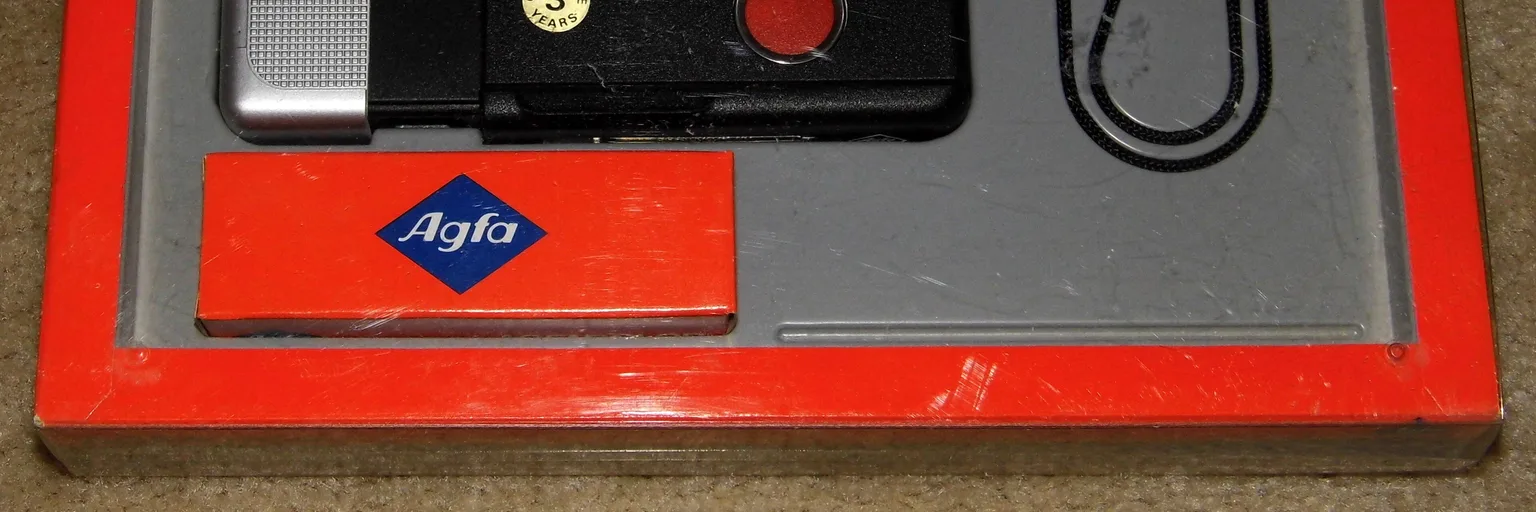
The 110 revival is real, but digital lookalikes sell the look, not the limit
Camp Snap and Flashback are selling the silhouette and the ritual of old film cameras. What made 110 creative was a constraint no sensor skin can reproduce.