The Siri Remote's Find My Feature: A Pragmatic Return for Apple
Apple's new Siri Remote for the Apple TV 4K isn't just an update; its focus on solving a tangible, everyday problem suggests a pragmatic shift in design philosophy.
Photo: Dillan Payne / Wikimedia Commons (CC BY-SA 4.0)
In a tech landscape constantly chasing the next big gesture control or the most minimalist interface, it's easy to lose sight of what users actually need. Are we truly better off with sleek, feature-rich remotes that disappear into the couch cushions, never to be seen again? Apple’s latest iteration of the Siri Remote, bundled with the new Apple TV 4K, suggests a surprising answer: sometimes, the best innovation is simply solving a common, analog problem with straightforward design.
On October 13th, Apple unveiled its fourth-generation Apple TV 4K, which will be available on November 13th with preorders opening immediately. Priced at $299, the new streaming box boasts an A19 chip, first seen in last year’s iPhone 17, enabling enhanced Siri AI capabilities and even far-field microphones for hands-free voice commands. It also significantly upgrades the home theater experience by supporting a four-speaker surround sound setup with compatible HomePods. Yet, for many, the most compelling update might just be found in the accompanying remote: a new Siri Remote that, while maintaining a familiar aesthetic, adds a critical new feature: Find My support with an audible alert [7].
The Universal Dilemma: Lost Remote, Found Solution
The previous Siri Remote, with its touch-enabled clickpad [1], offered precise control but could, like many remotes, be easily misplaced. Now, Apple has addressed this age-old frustration head-on. As TechCrunch reports, the new Siri Remote can emit a ringing sound, helping users locate it under couch cushions or in other forgotten corners. This isn't merely a small convenience; it’s a design choice that speaks volumes. While a general remote-finding feature using Find My was added in 2023, which showed directions in an app, the addition of an audible sound to the Siri Remote itself represents a tangible, immediate solution to a universal user pain point [6]. It's a pragmatic response in an era often prioritizing abstract features over concrete usability.
The Enduring Appeal of Feedback and Simplicity
Modern interfaces often strive for elegant simplicity, sometimes to the detriment of clear feedback. Swipes and gestures can feel futuristic, but their lack of tactile response can make them less intuitive than a physical button or a clear auditory signal. The new Siri Remote, by allowing users to trigger a sound, reintroduces a powerful form of feedback. This audible cue is an unpretentious yet effective way to confirm interaction and provide a clear outcome. It harkens back to design principles where functionality was often overtly expressed and user actions had direct, perceptible consequences. It demonstrates that true user-centric design often lies in simplifying the complex, not in making the simple more complex.
When "Old School" Is Just Smart Design
We often associate retro tech with physical buttons, clear indicators, and devices designed with an obvious purpose in mind. In our view, the new Siri Remote's Find My integration, with its audible component, isn't about bringing back clunky hardware, but rather seems to be about re-embracing a design philosophy where practicality trumps pure aesthetic minimalism. It appears to acknowledge that a remote control, at its core, is a tool meant to be easily accessible and usable, not a piece of abstract art that disappears. This feels like a move away from the expectation that users will always adapt to the technology, and towards technology adapting to the inherent, sometimes messy, realities of human use. This decision by Apple feels less like a radical innovation and more like a return to common sense, proving that sometimes, looking to past principles of straightforward design can lead to the most impactful present-day improvements.
In our view, the upgraded Siri Remote, despite maintaining its familiar design [7], delivers a powerful message: even as companies push the boundaries of AI and immersive experiences, the fundamental principles of user-centric design—solving real problems with clear, tangible solutions—remain paramount. This isn't just an update; we believe it's a quiet revolution in usability, reminding us that sometimes the smartest move is to make technology feel a little more found and a lot less lost.
No topics yet: start the first one.
More stories
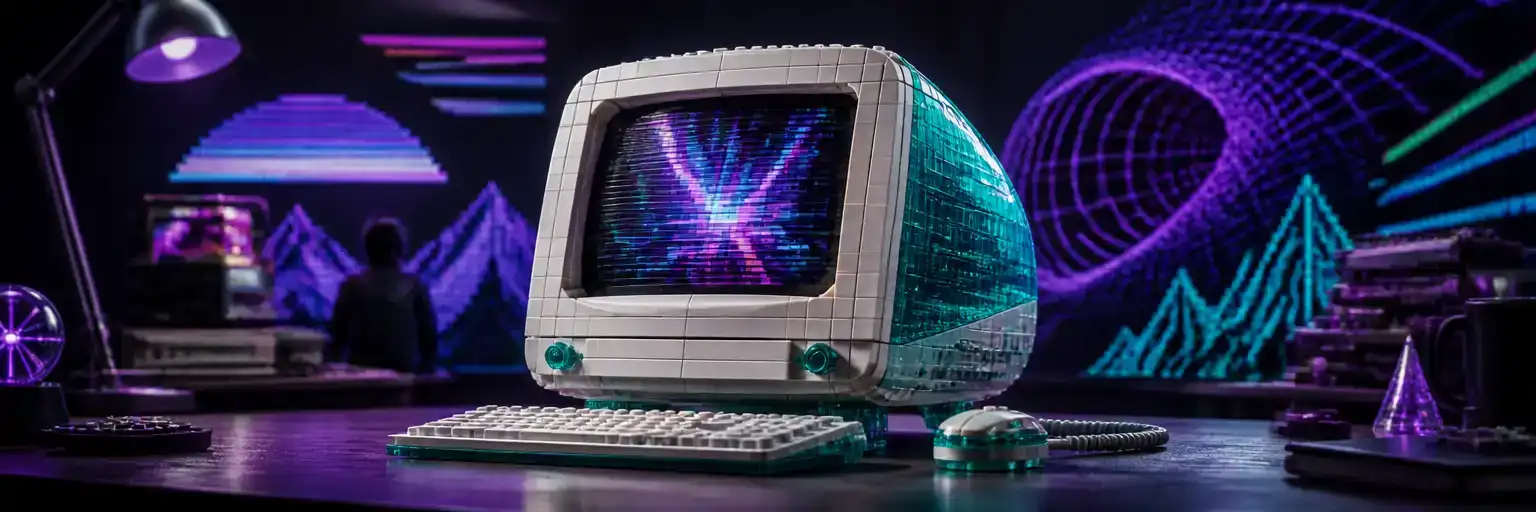
Why the iMac G3 LEGO project is more than just nostalgia
The community-backed initiative to immortalize the iconic Apple iMac G3 in LEGO bricks is not merely a trip down memory lane, but a powerful affirmation of design's lasting influence and a catalyst for digital art's future.
Flash Games: The Unsung Blueprint for Accessible Creative Coding
The remarkable resurgence of archived Flash games reveals a pivotal moment for creative coding and browser-based experiences, underscoring the enduring power of accessible tools and dedicated digital preservation.
PS5 Emulation on Xbox: A Boundary-Breaking Technical Statement
The surprising development of PlayStation 5 games booting on Xbox Series X via emulation is a testament to the open-source community's ingenuity, signaling a future where console boundaries blur and preservation efforts gain unprecedented visibility.

Community Ports: The Essential Architects of Retro Gaming's Future
Community-driven recompilations and native ports are not merely about reliving nostalgia; they represent the most dynamic and critical force ensuring classic games endure against technological obsolescence and proprietary barriers.