Beyond Pixels: The Deep Dive Into Retro Server Hardware
The renewed fascination with machines like the DEC AlphaServer 2100 signals a pivotal shift in retrocomputing, moving past simple gaming nostalgia toward a profound appreciation for historical architecture and the intricate dance of system revival.
AI-generated image
For years, the public perception of retrocomputing has often been framed by joystick-wielding enthusiasts, lost in the pixelated worlds of bygone video games. While that vibrant corner of the hobby remains, a compelling new current is drawing attention: the ambitious pursuit of bringing vintage server hardware back to life. Machines like the DEC AlphaServer 2100 are not just relics; they represent a significant shift from simple nostalgic play to a deeper, more technical engagement with computing history.
This nuanced trend recently came into sharp focus with Hackaday's piece detailing an enthusiast's efforts to revive an AlphaServer 2100. Acquired at the Vintage Computer Festival Midwest, this 1994 marvel, boasting a 64-bit Alpha RISC processor, came equipped with 256 MB of RAM—a substantial figure for its era, though the architecture supported up to 2GB. The challenge isn't merely powering it on; it’s about understanding its distinct architecture and coaxing an operating system, perhaps its native OpenVMS, back to functionality. This particular AlphaServer 2100 featured a single CPU board, though DEC originally sold these units with multiple-CPU support, making the 2100 one of the early 4-CPU Alpha computers designed to deliver powerful server capabilities at the departmental and work-group level.
More Than Just Old Games: A Glimpse Into Architectural History
This machine, from 1994, hails from the mid-1990s, a period often referred to as the "RISC wars," when various manufacturers championed their own high-end RISC architectures. The appeal of an AlphaServer 2100 lies far beyond its capacity to run Doom; it's about engaging with the engineering philosophies of a bygone era. Getting such a machine to boot an operating system, particularly one like the VAX-descended OpenVMS (which now lives on in the cloud and virtual machines), presents a profound intellectual challenge, fostering a deeper understanding of system internals and historical software stacks.
The Home Lab Revolution: Power and Pitfalls
The interest in older server hardware isn't limited to historical curiosities like the AlphaServer. Many enthusiasts are turning to more recent, though still outdated, enterprise-tier systems for home lab projects. For example, a dual-Xeon workstation from 2016, equipped with two Xeon E5-2650 v4 CPUs offering 24 physical cores and 48 v-cores, can be acquired for under $150, with a total investment around $350 including components. Such systems excel in virtualization, hosting numerous LXC containers and VMs, and often support ECC memory, making them robust for experimental setups.
However, this pursuit comes with its own set of challenges. As detailed by XDA Developers, while these machines are powerful for multi-threaded tasks, their single-core performance can be abysmal, and their power consumption can be exorbitant. A dual-Xeon system can pull 170W in idle wattage, dropping to 120-135W only after unplugging the GPU and applying power-saving BIOS tweaks. In stark contrast, modern embedded systems often idle under 30W. This translates to significantly higher electricity bills for 24/7 operation. Furthermore, finding replacement parts, especially compatible motherboards for specific Xeon processors, can be surprisingly difficult and expensive, complicating long-term maintenance.
Ultimately, whether it's coaxing an OpenVMS prompt from a 1994 AlphaServer 2100 or wrestling with the power budget of a repurposed Xeon workstation, the drive to revive and understand vintage server hardware is a testament to retrocomputing's evolution. It's a move beyond mere nostalgia, embracing the complexities of historical architecture, the practicalities of hardware restoration, and the satisfaction of mastering demanding technical challenges.
No topics yet: start the first one.
More stories
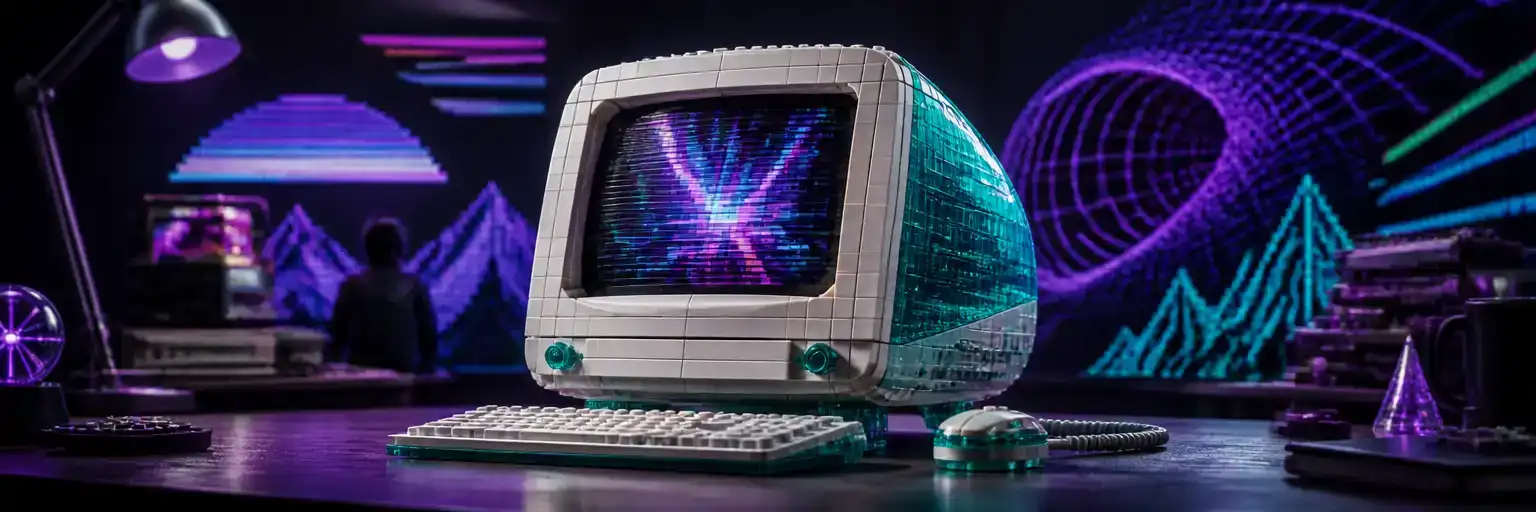
Why the iMac G3 LEGO project is more than just nostalgia
The community-backed initiative to immortalize the iconic Apple iMac G3 in LEGO bricks is not merely a trip down memory lane, but a powerful affirmation of design's lasting influence and a catalyst for digital art's future.
Flash Games: The Unsung Blueprint for Accessible Creative Coding
The remarkable resurgence of archived Flash games reveals a pivotal moment for creative coding and browser-based experiences, underscoring the enduring power of accessible tools and dedicated digital preservation.

PS5 Emulation on Xbox: A Boundary-Breaking Technical Statement
The surprising development of PlayStation 5 games booting on Xbox Series X via emulation is a testament to the open-source community's ingenuity, signaling a future where console boundaries blur and preservation efforts gain unprecedented visibility.

Community Ports: The Essential Architects of Retro Gaming's Future
Community-driven recompilations and native ports are not merely about reliving nostalgia; they represent the most dynamic and critical force ensuring classic games endure against technological obsolescence and proprietary barriers.