Arcade Machines: More Than Just Retro Gaming for Creative Coders
The resurgence of arcade machine purchases, from new replicas to vintage restoration projects, reveals a deeper appreciation for fixed-function hardware that resonates strongly with demoscene and creative coding communities.
Photo: VictorPines / Wikimedia Commons (CC BY-SA 4.0)
Why are physical arcade machines, those imposing relics of a bygone era, making such a compelling comeback in our digital-first world? It might seem like a simple case of nostalgia, a yearning for simpler times when quarter-munching cabinets ruled the local hangout. But for many, especially those in the creative coding and demoscene communities, the allure of these machines runs far deeper than just a trip down memory lane. It's about a profound connection to dedicated hardware, a tangible canvas for artistic expression that modern, general-purpose computing often struggles to replicate.
Indeed, the desire for an arcade machine at home is palpable. Just recently, Profesional Review highlighted a personal quest to find the perfect arcade machine, settling on the Arcade1Up Street Fighter Legacy for 479.22 euros, a significant drop from its original 599.99 euro price. This follows another report from La Razón noting the availability of the SNK Mini International Edition for just 56 euros, a miniature console packing dozens of classic Neo Geo titles. Meanwhile, the interest in genuinely vintage hardware continues, evidenced by an auction held this Friday, October 16th, in Santa Fe, Argentina, where ten retro arcade machines were put up for bids, albeit needing restoration, with starting prices around 20,000 Argentine pesos each, as reported by Perfil.
The Allure of the Tangible and Dedicated
In an age dominated by cloud computing and infinitely malleable software, there's a unique satisfaction in interacting with a piece of hardware designed for a singular purpose. For creative coders, defined as those who combine programming techniques with artistic expression, according to SMU's Meadows School of the Arts, the constraints of a physical arcade machine can be a powerful catalyst. Unlike a PC that can do anything, an arcade cabinet dictates its interaction through its joysticks, buttons, and dedicated screen. This limitation, paradoxically, can foster immense creativity, pushing artists and developers to innovate within strict boundaries, much like the demoscene community has always done with retro platforms.
No topics yet: start the first one.
More stories
The pocket C64 slipping to April 2027 is the best news it could get
Blaze pushed THEC64 Handheld from October 2026 to April 2027 over build quality. For a 129.99-euro emulator, a late launch beats a bad one.
MustardOS Andromeda proves handhelds get their soul from the community
A community-built firmware just shipped roughly 1,250 changes for cheap retro handhelds. Manufacturers should stop treating that as a threat and start treating it as the product.
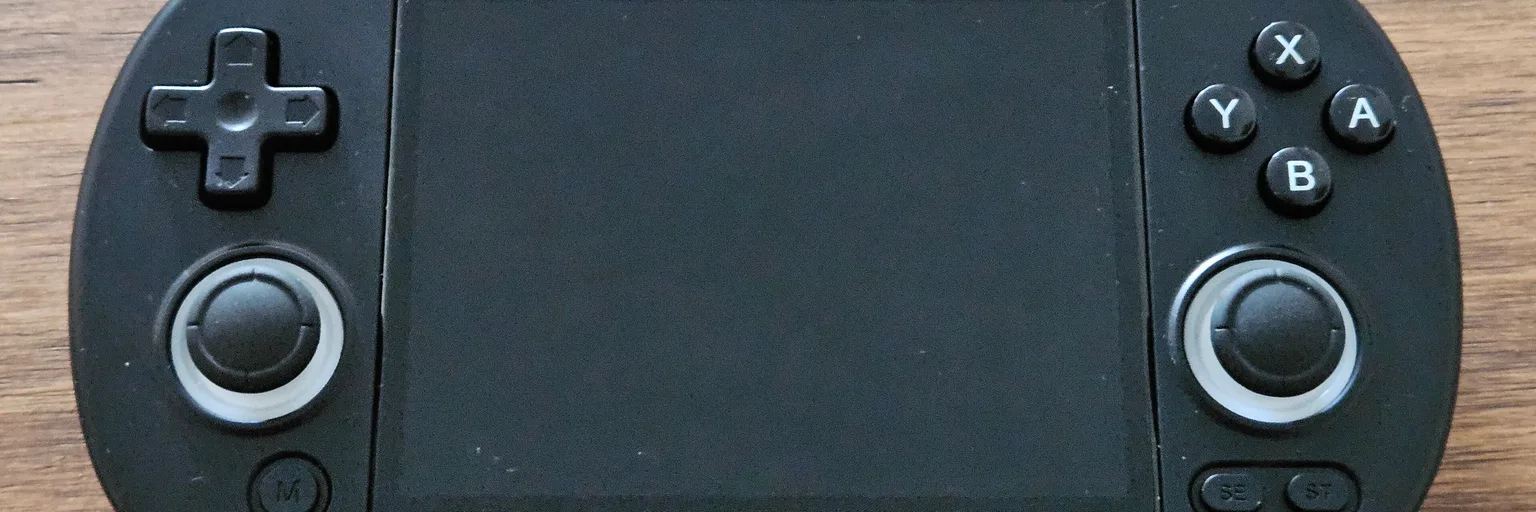
The A1200 at 190 euros: judge it by what it lets you do
A full-size Amiga 1200 remake for about 190 euros is welcome, but the badge isn't the point: openness, hackability and the game library decide if it's a real Amiga.
The 110 revival is real, but digital lookalikes sell the look, not the limit
Camp Snap and Flashback are selling the silhouette and the ritual of old film cameras. What made 110 creative was a constraint no sensor skin can reproduce.